The best clinical technology may be the kind you barely notice
Ambient Clinical Recording helps preserve the patient conversation without allowing documentation to dominate it.
 Responsible AI
A patient begins describing what has been happening.
The symptoms did not start today. There was mild discomfort first, followed by a fever, interrupted sleep, a medication taken at home and a previous consultation that did not resolve the problem. Some details arrive clearly. Others emerge only after the clinician asks the right follow-up questions.
While listening, the clinician is also expected to remember important facts, observe the patient, consider possible causes, explain the next steps and document the encounter accurately.
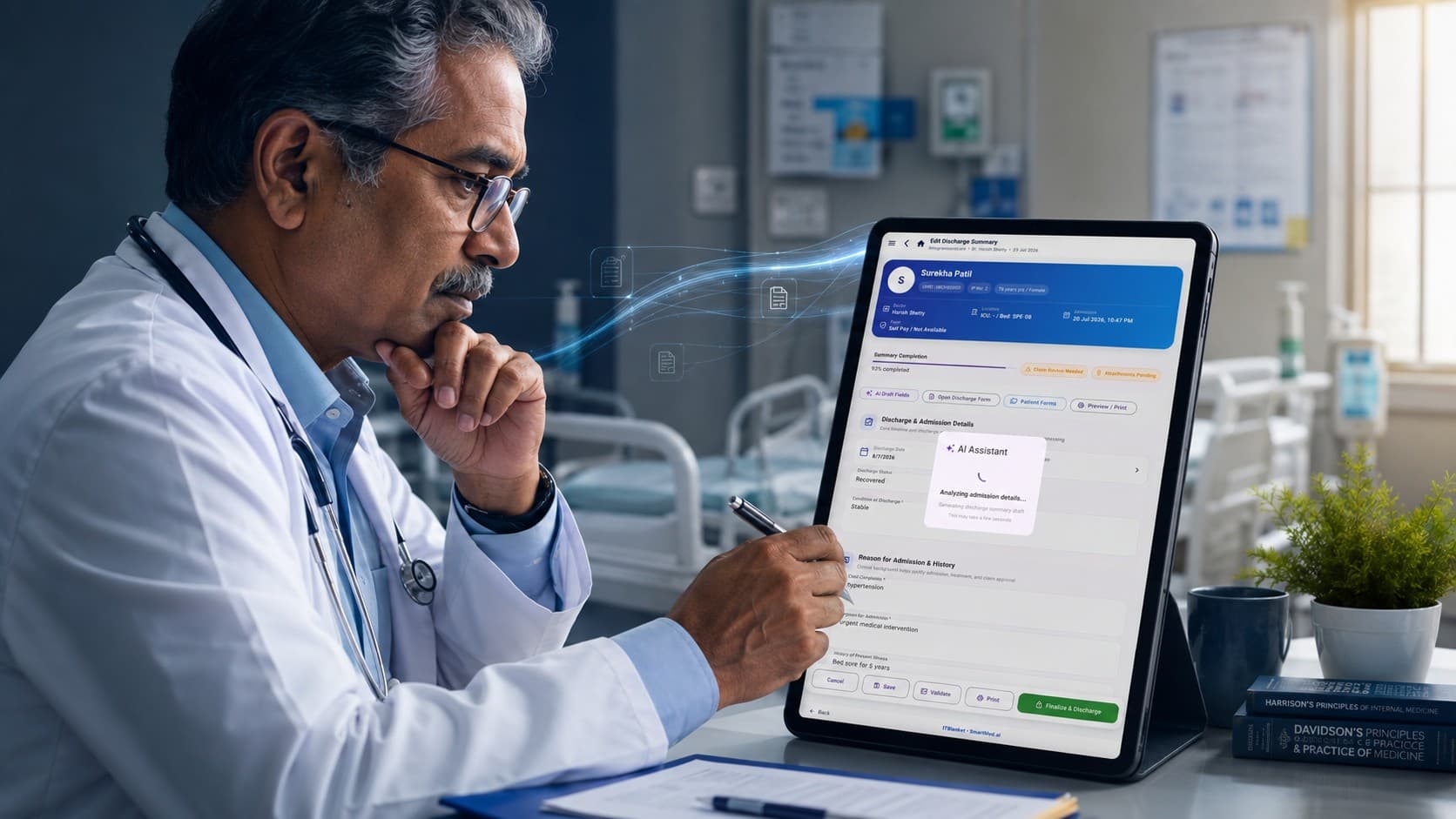
This is where healthcare technology often creates an uncomfortable choice: maintain eye contact with the patient or turn toward a screen and begin typing.
SmartMed.ai’s Ambient Clinical Recording is designed to reduce that compromise.
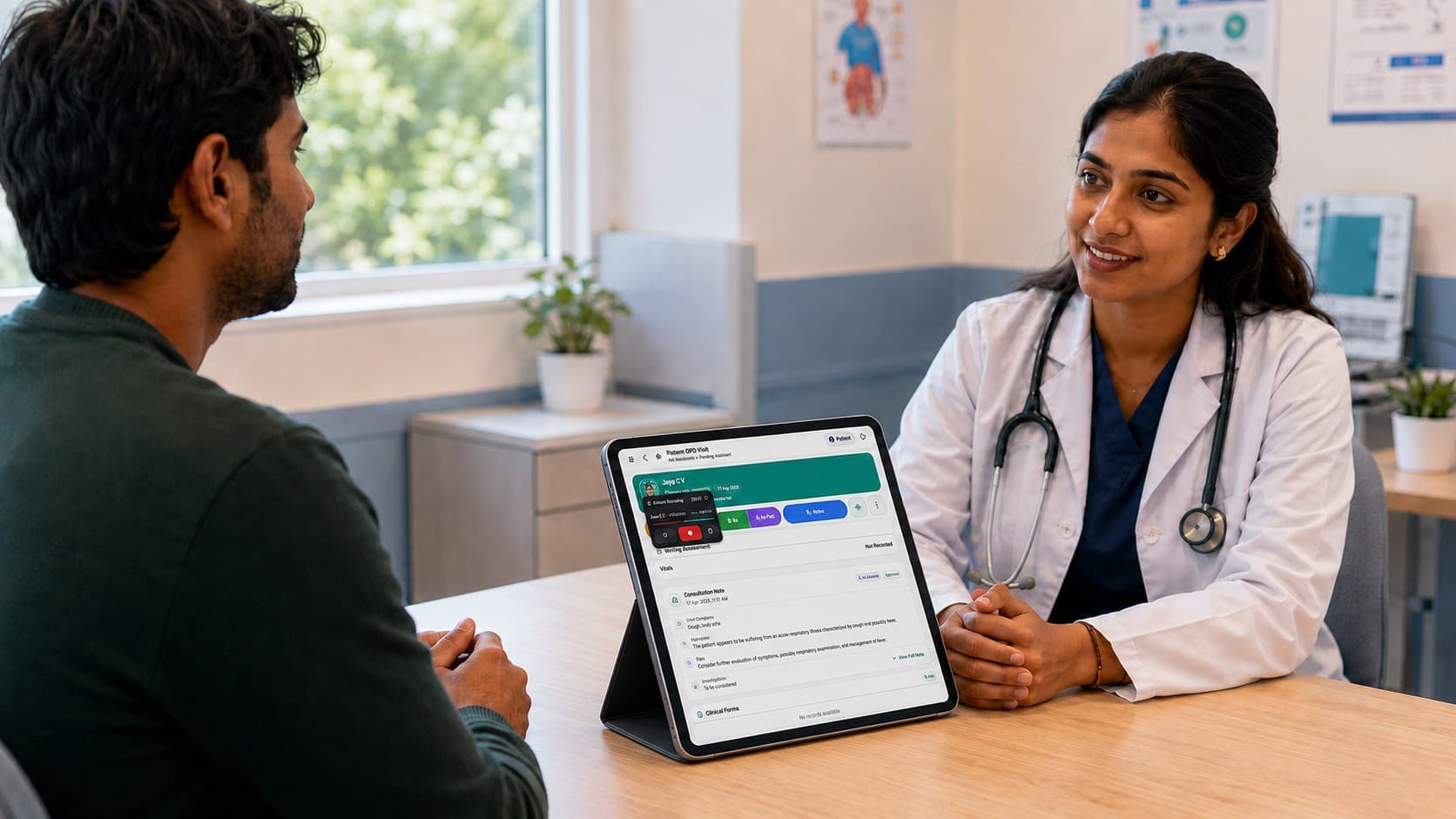
With the patient’s consent, the clinician can start an ambient recording directly from the SmartMed.ai application on a tablet. The consultation can then proceed more naturally while the system helps transform the conversation into an organised clinical draft.
The technology does not take over the consultation. It helps preserve it.
More attention for the person in front of you
Documentation is essential, but the act of documenting can interrupt the interaction it is meant to describe.
When clinicians repeatedly pause to type, move between fields or reconstruct the conversation after the patient has left, subtle but important information can be missed. The patient may also feel that the computer is receiving more attention than they are.
Ambient recording changes the rhythm of the encounter.
Instead of trying to capture every detail manually as it is spoken, the clinician can concentrate on listening, observing and asking better questions. SmartMed.ai works quietly in the background, helping prepare a structured clinical note for review.
The difference may sound simple, but it can be felt immediately:
- Fewer interruptions during the consultation
- More natural eye contact
- Better continuity in the conversation
- Less pressure to remember every detail afterward
- A useful starting point for completing the clinical record
The result is a consultation that feels more like a meaningful conversation and less like a data-entry exercise.
From conversation to a reviewable clinical draft
After the consultation, SmartMed.ai can transcribe the recorded conversation and organise relevant information into a structured draft.
Depending on what was discussed, the draft may include:
- Chief complaint
- History of the present illness
- Reported symptoms
- Relevant medical history
- Examination findings mentioned during the encounter
- Clinical assessment
- Possible diagnoses
- Medication information
- Recommended investigations
- Treatment plan
- Follow-up instructions
The clinician is not presented with a blank screen and expected to reconstruct the entire encounter from memory. Instead, there is a meaningful first draft that can be reviewed, corrected and completed.
This distinction is important: the generated content is a draft, not a final medical record.
The treating clinician remains responsible for confirming that the note accurately reflects the consultation. Misunderstood words, incorrect medication names, missing details or irrelevant conversation can be corrected before anything is approved.
SmartMed.ai assists with preparation and organisation. Clinical interpretation and final approval remain with the healthcare professional.
Designed for the way clinicians actually work
Ambient documentation becomes considerably more useful when it is available on the device already being used during patient care.
In SmartMed.ai, Ambient Clinical Recording is designed as part of the tablet-based clinical workflow. A clinician can begin recording from the patient’s consultation screen, pause when necessary and finish the session without moving to a separate application or workstation.
The generated note can then be reviewed within the same connected patient workflow.
That continuity matters.
A standalone transcription tool may produce a block of text that must be copied, reorganised and manually transferred into the correct patient record. This can replace one administrative task with another.
SmartMed.ai is designed to connect the captured conversation with the relevant patient, appointment and clinical encounter. The value is not merely converting speech into text. It is helping useful information reach the right part of the clinical workflow.
The real benefit appears after the consultation
During a busy clinic, documentation work rarely disappears. It accumulates.
A clinician may complete several consultations before finding time to finish the notes. By then, important details can be harder to recall. Shorthand notes must be interpreted, information must be reorganised and each patient’s story must be reconstructed.
Ambient Clinical Recording helps create the first draft while the conversation is still fresh.
This can reduce the effort required to complete the record and encourage more consistent documentation. Instead of beginning with an empty form, the clinician begins with information that has already been captured and organised for review.
The objective is not to rush consultations or increase patient volume at any cost. It is to reduce the clerical work surrounding care so that professional time can be used more thoughtfully.
For an individual clinician, this may mean fewer notes waiting at the end of the day.
For a healthcare organisation, it may mean more complete records, improved continuity and clinical information that is easier for authorised teams to understand.
For the patient, it may mean something even more immediate: a clinician who appears to be listening.
Consent should never become a background detail
Clinical conversations contain highly sensitive personal information. Ambient recording should therefore never become invisible or automatic.
Before recording begins, the patient should understand that the conversation will be recorded and processed to assist with clinical documentation. Consent should be obtained clearly and in a manner appropriate to the organisation’s policies and applicable requirements.
The clinician should also be able to pause or stop the recording whenever necessary.
A responsible ambient documentation workflow should make the following principles visible:
- Recording begins only after appropriate patient consent.
- The clinician remains aware that recording is active.
- The recording can be paused or stopped when required.
- Generated content is treated as a draft.
- The clinician reviews the information before approval.
- Only the approved clinical note becomes part of the intended workflow.
- Access and handling follow the organisation’s privacy and security policies.
Trust is not created simply by adding a consent button. It is created by ensuring that the entire workflow respects the purpose for which the conversation was captured.
Why human review remains essential
Healthcare language is complex.
A consultation may contain medication names, abbreviations, measurements, local expressions and conversations involving more than one language. Patients may describe symptoms indirectly or revise an earlier statement after further discussion.
Speech recognition can misunderstand a word. An AI system can organise information under the wrong heading. A polished sentence can still contain an incorrect detail.
That is why the SmartMed.ai workflow keeps the clinician in control.
The clinician can compare the generated draft with the consultation, correct misunderstood terms, remove irrelevant conversation and add findings that were not spoken aloud. The final note should only be approved when the clinician is satisfied that it accurately represents the encounter.
This is responsible clinical AI in practical form: automation around the work, not authority over the decision.
A simple workflow from recording to approval
The SmartMed.ai ambient workflow is designed to remain clear and manageable:
- Open the relevant patient consultation on the SmartMed.ai tablet.
- Explain the ambient documentation process and obtain the patient’s consent.
- Start the recording.
- Conduct the consultation naturally.
- Pause the recording if a private or unrelated conversation occurs.
- Finish the recording when the consultation is complete.
- Allow SmartMed.ai to transcribe and prepare the structured clinical draft.
- Review every relevant section.
- Correct, add or remove information as necessary.
- Approve the note only when it accurately reflects the consultation.
The process is intentionally centred on review. Speed is valuable, but accuracy, context and accountability matter more.
Start with one consultation
Ambient Clinical Recording can be difficult to appreciate fully from a feature list or product demonstration. Its value becomes clearer when it is experienced during a real clinical workflow.
Start with one suitable consultation.
Obtain consent, place the tablet where it can capture the conversation clearly and conduct the encounter naturally. When the consultation ends, review the generated note and compare the experience with the usual documentation process.
Ask a few practical questions:
- Did the clinician spend more time looking at the patient?
- Did the consultation feel less interrupted?
- Was the patient’s story captured with useful detail?
- How much editing did the generated draft require?
- Did the structure make the note easier to complete?
- Was important context preserved?
- Did the clinician finish documentation sooner?
- Was the patient comfortable with the consent process?
The goal is not to prove that AI can write a clinical note without supervision. The more useful question is whether it helps a clinician produce a better-reviewed note with less administrative effort.
What a thoughtful implementation looks like
Introducing ambient documentation should be treated as a clinical workflow improvement, not merely a software installation.
A small pilot is often the best starting point. Select clinicians who are willing to evaluate the workflow carefully, use it during suitable consultations and record what works well and what needs adjustment.
Pay attention to:
- Patient consent and communication
- Recording quality in the consultation environment
- Performance with different accents and languages
- Recognition of clinical terminology
- The amount of editing required
- The accuracy of structured sections
- Time saved during and after consultations
- Clinician and patient comfort
- Organisational privacy and retention requirements
This approach helps the organisation judge the feature using real clinical experience rather than assumptions.
It also reinforces an important principle: successful healthcare AI is not defined only by what the technology can generate. It is defined by how safely and usefully that output fits into everyday care.
Technology that gives attention back
Healthcare does not need more technology competing for the clinician’s attention. It needs technology that knows when to step into the background.
SmartMed.ai’s Ambient Clinical Recording brings that idea into the consultation room through a familiar tablet workflow. It listens with permission, prepares information for review and leaves clinical judgment where it belongs—with the healthcare professional.
The patient gets a clinician who can be more present.
The clinician gets a meaningful head start on documentation.
The organisation gets a more connected and structured clinical record.
Sometimes the most convincing technology is not the one that asks you to watch it work.
It is the one that gives you more time to watch, listen to and care for the patient.
Experience it inside SmartMed.ai
If clinical documentation is consuming time that could be spent with patients, Ambient Clinical Recording is worth experiencing firsthand.
Try it during one appropriate consultation. Review the generated draft. Measure the effort required to complete it. Most importantly, notice how the interaction feels when the clinician is no longer required to choose continuously between listening carefully and documenting every detail.
SmartMed.ai does not aim to replace the clinician’s voice, expertise or judgment.
It helps ensure that the patient’s story can be captured without allowing documentation to dominate the encounter.