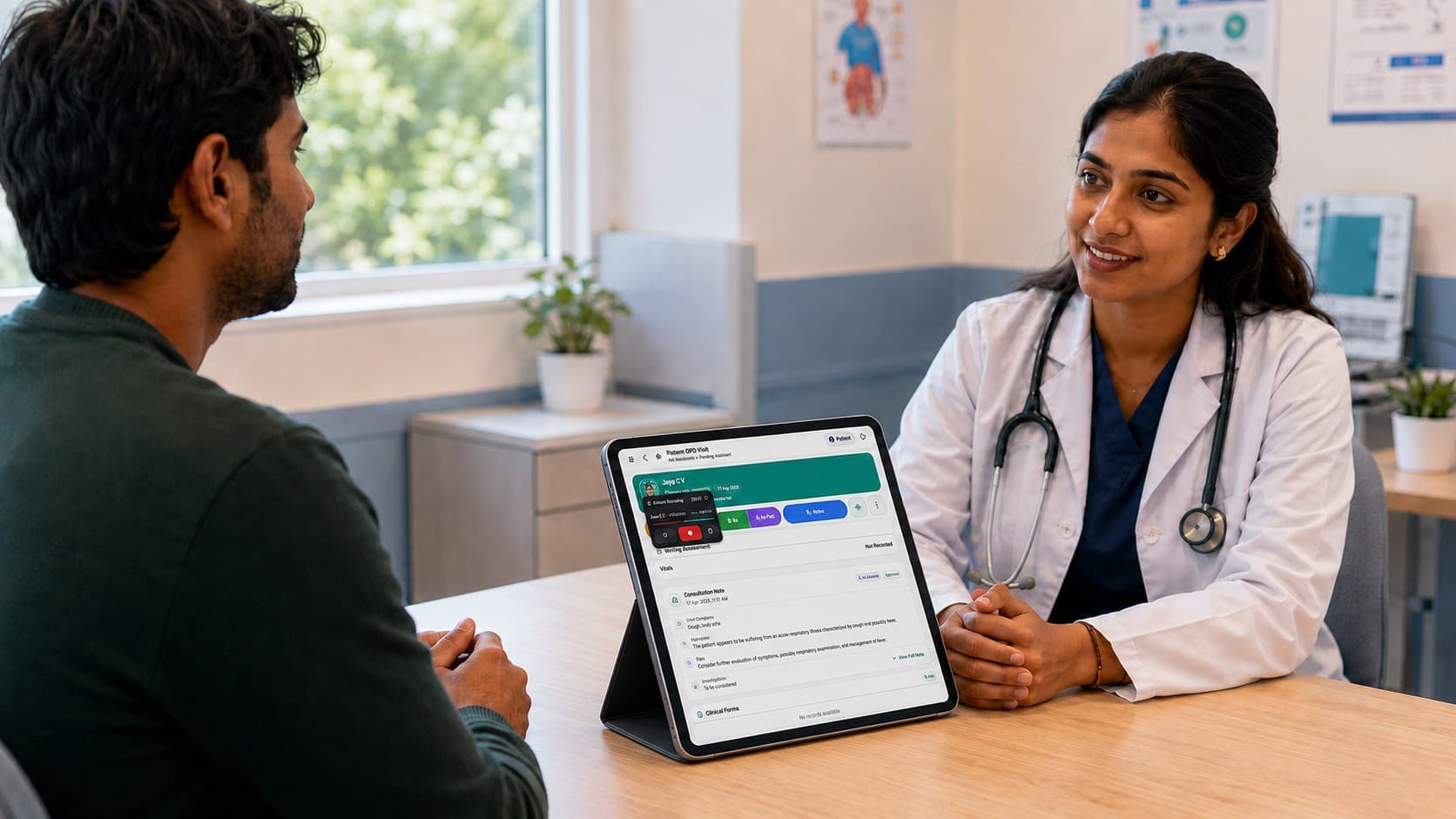
Telemedicine has grown up. Has the workflow around it?
A virtual consultation may last 20 minutes. The patient's care does not end when the call does.
 Telemedicine
A patient books a follow-up because travelling to the clinic is difficult. The doctor reviews her progress over video, adjusts the treatment plan and recommends another appointment in two weeks.
The call ends. The care journey continues.
Where is the consultation documented? How does the patient receive the prescription? Will the doctor have this discussion available at the next appointment? Who arranges the follow-up?
For a healthcare practice, these questions matter as much as the video connection. Telemedicine works best when the virtual visit fits into the care team’s existing responsibilities.
Why telemedicine matters now
Remote consultation has become a familiar part of healthcare delivery. In India, a Government of India report states that 28.2 crore eSanjeevani consultations received standardized AI-enabled clinical decision support between April 2023 and November 2025. This figure describes activity in a public service over that period; it does not measure adoption by private practices.
The conversation is also turning toward quality. The World Health Organization's telemedicine implementation guide discusses the planning and maintenance involved in a service, while its telehealth quality of care tool focuses attention on patient safety and trust.
For an independent doctor, clinic or hospital, the practical question is how to offer virtual consultations using its own clinicians, staff and facilities while keeping patient care organized.
The healthcare provider runs the service
SmartMed.ai by ITBlanket is a SaaS platform that includes telemedicine features. ITBlanket provides the software; subscribing healthcare providers manage and deliver their own telemedicine services.
Each practice determines its consultation schedules, staffing, patient processes and clinical decisions. Its clinicians decide which patients can be assessed virtually and when an in-person visit is necessary. SmartMed.ai supports the practice in coordinating the virtual appointment with its wider patient care workflow.
This matters because adding video to a practice is only one part of setting up a service. The team also needs a way to prepare the encounter, manage patients who are waiting, document what took place and carry out the next steps.
Before the call: make the appointment clear
Imagine a clinic offering both in-person and virtual consultations. Staff need to know which patients are waiting, which doctor is responsible and whether a visit has begun. The patient needs straightforward instructions for joining.
With SmartMed.ai, the practice can schedule a telemedicine appointment or manage a patient through a virtual lobby. Its team handles assignment, the doctor can start or rejoin the video consultation, and the patient joins through an appointment-specific SmartMed link.
The practice decides how to staff and administer those steps. The software helps its team see and manage them as part of an appointment rather than as an isolated call.
During and after the call: keep the clinical record connected
A virtual conversation can lead to a treatment decision, a prescription, an investigation or a further appointment. Those actions belong in the patient's ongoing record.
SmartMed.ai connects virtual appointments with the broader patient workflow, allowing the clinician to document the encounter and manage its next steps. The video meeting enables the conversation; the clinical record carries the decisions forward.
There is an important distinction between ending a video meeting and completing an appointment. In SmartMed.ai, the appointment remains in progress until the doctor records the required clinical information and manually completes it. A call ending on its own does not declare the clinical work finished.
Choosing the right setting for care
Virtual care may make a suitable follow-up easier for a patient to attend. It can help a practice remain connected with someone who cannot readily travel. Other circumstances call for a physical examination, a test, a procedure or urgent in-person care.
The treating clinician and healthcare provider determine the appropriate route for each patient. Telemedicine gives the practice another way to deliver care when a remote consultation is suitable.
Questions worth asking about a telemedicine workflow
Before adopting or expanding virtual consultations, a practice can examine the whole journey:
- How are virtual appointments scheduled and assigned?
- Can staff see and manage patients waiting for a consultation?
- Is joining straightforward for patients and clinicians?
- Can doctors access relevant patient information and document their findings?
- How are prescriptions and follow-up handled?
- Who decides that the clinical encounter is complete?
- What happens when the patient needs in-person assessment?
The answers reveal how well a virtual service will fit into everyday care.
At SmartMed.ai, we are building tools for independent doctors, clinics and hospital teams to administer telemedicine within their own practices. ITBlanket provides the SaaS platform. The subscribing provider runs the service, makes the clinical decisions and delivers the care.
If you are exploring virtual consultations for your practice, we would be glad to show you how the workflow works. Register for a SmartMed.ai demo and discuss your team's needs with us.